
Pengfei Classroom | “Meeting Fatigue”? How to Hold Effective Meetings?
Release Date:
2022-08-31

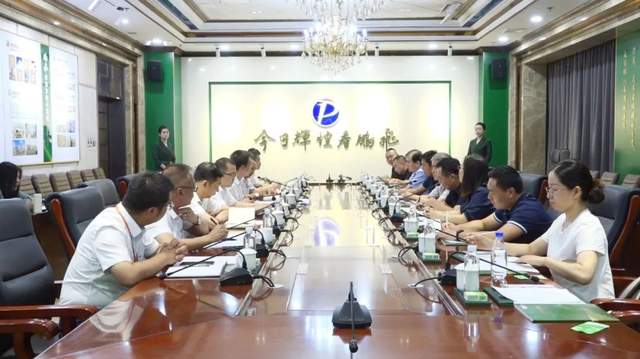
Meetings are the most cost-effective means of communication—this is a widely accepted management principle. As corporate groups grow ever larger, meetings of all sizes have become indispensable. Yet if a company’s leaders fail to conduct meetings effectively or cannot devise sound approaches, they risk falling prey to “meeting fatigue.” So what exactly are the drawbacks of this phenomenon?
1. Wasting time: Work hours are fragmented.
An excessive number of meetings and their prolonged duration inevitably encroach on other work time, fragmenting it in the process. This prevents employees from focusing on the critical tasks that demand their attention, thereby hindering the smooth execution of daily operations.
2. The meeting was inefficient.
Human attention cannot remain focused for extended periods; once a meeting exceeds 90 minutes, cognitive engagement declines, information processing slows, and ideas lose their originality. Prolonged meetings hinder problem-solving and result in low efficiency.
3. Giving rise to feelings of annoyance
An excessive number of meetings can leave participants feeling weary and resistant, perceiving them as largely pointless—wasting time and disrupting regular work—and consequently leading to a lack of seriousness and reluctance to engage in discussions.
So what is a scientifically sound and effective way to conduct meetings? We’ll walk you through it in detail next.
1. Hold meetings only when absolutely necessary.
Consider whether a meeting is truly necessary, and invite only those who are essential to attend.
2. Establish meeting objectives and arrangements in advance.
Set the meeting’s purpose, clearly define the issues to be addressed, and articulate them as specifically as possible so that every participant understands them fully; moreover, ensure that all relevant preparations are completed in advance.
3. The moderator should maintain control of the situation and ensure the meeting agenda progresses smoothly.
The meeting chair should maintain control of the proceedings, manage the discussion time, and ensure that the conversation stays focused on the agenda; when participants stray from the topic, the chair should intervene promptly.
4. Encourage the active participation of every attendee.
Meetings are a two-way communication process, and obtaining honest feedback from everyone is crucial. Ensuring that all participants contribute to the discussion is the responsibility of the meeting facilitator.
5. The meeting’s spirit must be communicated promptly after the session.
Conclude the meeting with an action plan to ensure that all participants clearly understand the next steps. Following the meeting, promptly communicate its key takeaways to relevant stakeholders through dedicated briefings, press releases, internal memos, and other appropriate channels. Such communication should be grounded in the meeting’s outcomes, conducted in a scientifically rigorous manner, and free from inaccuracies.
6. Resolution tracking must be closed-loop.
Meetings are convened to align thinking, deliberate on measures, and resolve issues. With respect to the resolutions adopted at meetings, it is essential to see them through to completion by establishing a follow-up mechanism to track implementation. This includes monitoring whether the tasks assigned during the meeting have been carried out and whether the issues raised have been addressed, thereby conducting inspections and evaluations to ensure that all resolutions are fulfilled on time and in accordance with the stipulated requirements.
General Secretary Xi Jinping once said, “Empty talk harms the country; practical action strengthens it,” and Chairman Zheng Peng has likewise stated, “We must act with earnestness and pragmatism, putting ‘doing’ first.” This calls for us to approach implementation with the resolve of “one part planning, nine parts execution,” and to proactively innovate our meeting‑holding practices—holding fewer meetings, shorter ones, meetings that address real problems, and meetings that deliver tangible results. Let this become a guiding principle, integrated into our daily work, so that meetings can fulfill their intended purpose.
Related News

Address: Intersection of Zhenxing Street and Zhonghe Road, Xiaoyi City, Shanxi Province

Mobile version of the website

Official WeChat Public Account
